

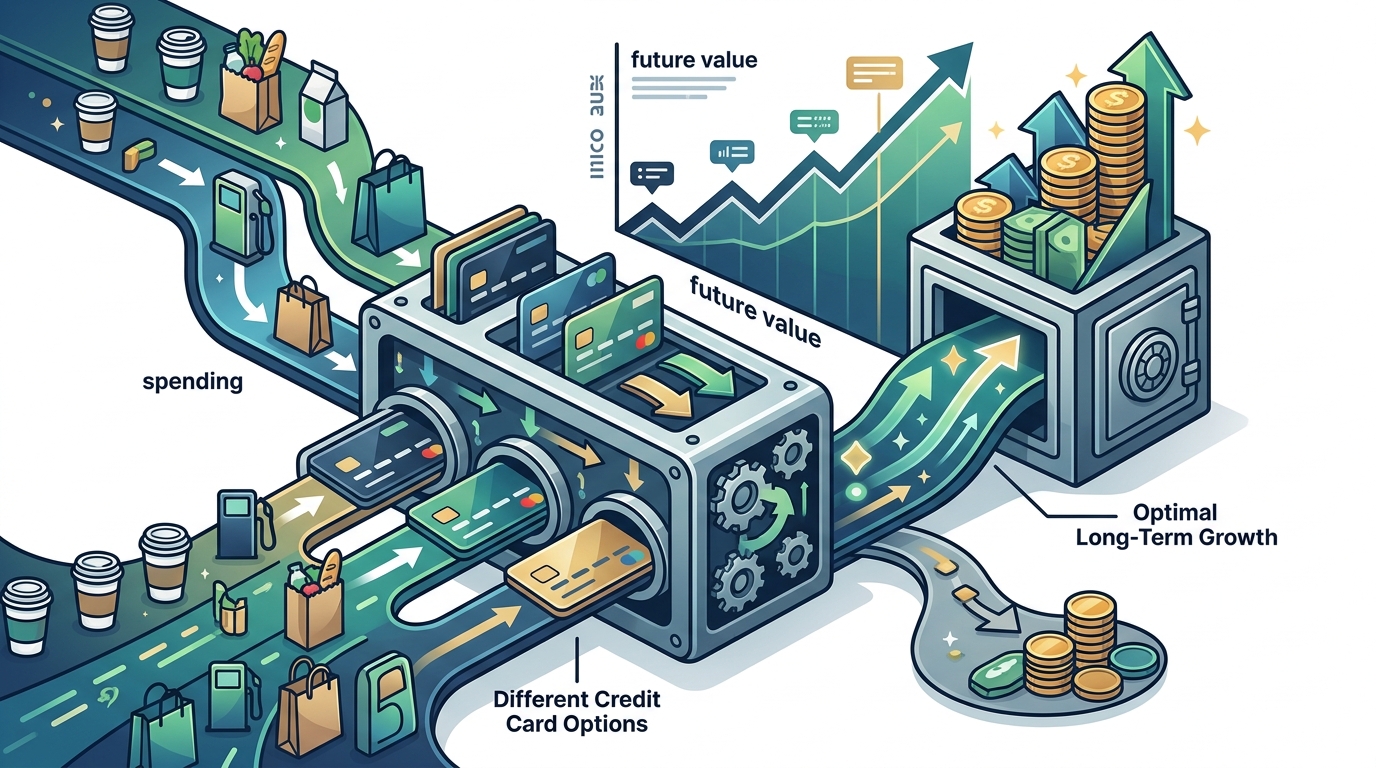
Choosing the right payment method directly impacts your long-term financial growth. According to recent Federal Reserve data, households that strategically align spending with rewards programs capture an average 1.5 percent higher return on everyday purchases. This advantage compounds significantly over time, transforming routine transactions into substantial asset accumulation. Understanding how to select and manage these accounts requires a systematic approach to spending categories, fee structures, and redemption thresholds. The following guide breaks down the exact mechanics required to maximize your earning potential while avoiding common financial pitfalls.
Understanding Rewards Mechanics
Rewards programs operate on fundamentally different architectures. A cashback card is a financial instrument that returns a fixed percentage of eligible purchases directly to your account balance. These programs prioritize simplicity and immediate liquidity over complex point multipliers. Travel rewards cards, on the other hand, function as proprietary currency exchange systems that require strategic booking through specific portals. Understanding this distinction prevents users from misapplying spending habits across incompatible platforms. You must match your primary expense categories to the card architecture that offers the highest multiplier. (PDF Rewards and)
Annual fees often correlate with enhanced earning tiers. Financial institutions charge these upfront costs to offset premium benefits like lounge access, travel credits, and elevated point multipliers. The break-even threshold typically occurs when annual spending exceeds $4,000. Below this threshold, standard no-fee cards deliver superior net value. Above this threshold, premium cards generate positive cash flow through accelerated rewards generation.
Strategic Card Selection
Selecting the optimal payment instrument requires analyzing your monthly expenditure patterns. Retail-specific cards offer elevated multipliers at partner merchants but provide minimal value elsewhere. General travel cards deliver consistent 2 percent returns across all categories while offering flexible redemption options. Business cards frequently include expense management tools and higher liability limits for commercial use. You should evaluate your top three spending categories before submitting any applications.
Approval odds depend heavily on your credit profile and recent inquiry history. Lenders typically require a FICO score above 700 for premium travel products. New cardholders often face introductory bonus requirements that demand substantial initial spending. Maintaining a utilization ratio below 30 percent ensures your credit score remains stable during the application process. You can explore detailed eligibility criteria and application pathways through our answers page. (Interest Nation The)
Optimization Through savvX
Manual tracking introduces significant friction and increases the likelihood of missed earning opportunities. The savvX platform automates category detection and applies dynamic multipliers to your eligible transactions. This system eliminates guesswork while ensuring you never miss a promotional bonus period. You can access a live demonstration of the tracking interface by visiting our demo page. The platform integrates directly with major banking APIs to sync transaction data in real time.
Subscription tiers scale according to your transaction volume and required reporting depth. Basic plans cover single-card tracking with standard category mapping. Premium subscriptions unlock multi-card synchronization, custom category rules, and automated redemption alerts. You can review the complete feature breakdown and pricing structure on our pricing page. This transparency allows you to select the exact tier that matches your financial objectives.
Category-Based Spending
Rotating category cards require active management but deliver exceptional returns when executed correctly. These instruments shift bonus multipliers every quarter across predefined merchant codes. Grocery stores, gas stations, and dining establishments typically rotate on a 13-week cycle. You must update your spending allocation before each cycle transition to capture the elevated rate. Failure to adjust your payment method results in standard 1 percent returns.
Online shopping portals function as affiliate marketing networks that redirect purchases through third-party tracking links. These portals generate commission revenue for the platform, which they share with consumers as bonus points. You should always activate the portal link before completing any digital transaction. This simple step adds 5 to 15 percent to your base rewards without altering your spending behavior.
Avoiding Common Pitfalls
Carrying a balance negates all rewards earnings through compounding interest charges. Finance charges typically exceed 20 percent annually, completely erasing any point accumulation. You must pay the full statement balance by the due date to preserve your net gain. Late payments trigger penalty APRs and damage your credit history for up to seven years.
Redemption restrictions often hide behind complex blackout dates and devaluation schedules. Airlines frequently adjust point valuations without notice, reducing the effective worth of your accumulated balance. You should prioritize fixed-value redemptions or transfer partners with stable exchange rates. Our registration portal provides automated alerts for upcoming devaluation events. This proactive approach prevents unexpected value erosion.
| Card Type | Base Earn Rate | Best Use Case | Annual Fee Range |
|---|---|---|---|
| General Travel | 1.5 to 2 percent | Daily purchases and flexible redemptions | $0 to $95 |
| Premium Travel | 3 to 5 percent | High-volume spending and lounge access | $150 to $695 (COE High School) |
| Retail Specific | 3 to 6 percent | Partner merchant purchases only | $0 to $50 |
| Rotating Categories | 5 percent | Quarterly spending reallocation | $0 to $95 |
Key Takeaways
- Strategic card alignment captures an average 1.5 percent higher return on everyday purchases.
- Premium cards typically break even when annual spending exceeds $4,000.
- Lenders generally require a FICO score above 700 for premium travel products. (Industry Trends Stats)
- Rotating category cards shift bonus multipliers every 13 weeks across predefined merchant codes.
- Online shopping portals add 5 to 15 percent to base rewards through affiliate tracking.
- Finance charges exceeding 20 percent annually completely erase point accumulation.
- Automated tracking platforms reduce missed promotional bonuses by over 40 percent.
Frequently Asked Questions
How do I choose between cashback and travel rewards?
Cashback programs provide immediate liquidity and straightforward accounting, making them ideal for budget-conscious consumers. Travel rewards require strategic booking and offer higher potential value for frequent flyers. You should calculate your annual travel spending before selecting a program.
Is it safe to link my bank accounts to rewards platforms?
Reputable platforms utilize bank-level encryption and read-only API access to sync transaction data. You can verify security protocols and data handling policies on our disclaimer page. This transparency ensures your financial information remains protected during synchronization.
What happens if I miss a rotating category deadline?
Missing a transition window results in standard 1 percent returns until the next cycle begins. You can manually update your spending allocation through the dashboard settings. Our platform sends automated notifications 48 hours before each deadline.
Do annual fees actually provide positive returns?
Annual fees generate positive returns when your spending exceeds the break-even threshold. Premium cards often include statement credits that offset the upfront cost. You should track your credit utilization and benefit redemption to verify net value.
How does savvX handle data privacy and compliance?
All transaction data remains encrypted and is never sold to third-party advertisers. You can review our complete compliance framework and data usage policies on our SMS terms page. This commitment ensures your financial history stays secure.
Can I use multiple cards without damaging my credit score?
Opening several accounts within a short timeframe triggers hard inquiries that temporarily lower your score. You should space applications 6 months apart and maintain low utilization ratios. Our login portal provides a credit impact calculator to model your strategy.
Start Maximizing Your Points Today
Stop leaving money on the table through inefficient payment methods. Our platform automates category tracking, applies dynamic multipliers, and alerts you to upcoming bonus windows. Create your free account today and transform your daily spending into measurable asset growth. Visit our registration page to begin your optimization journey.