

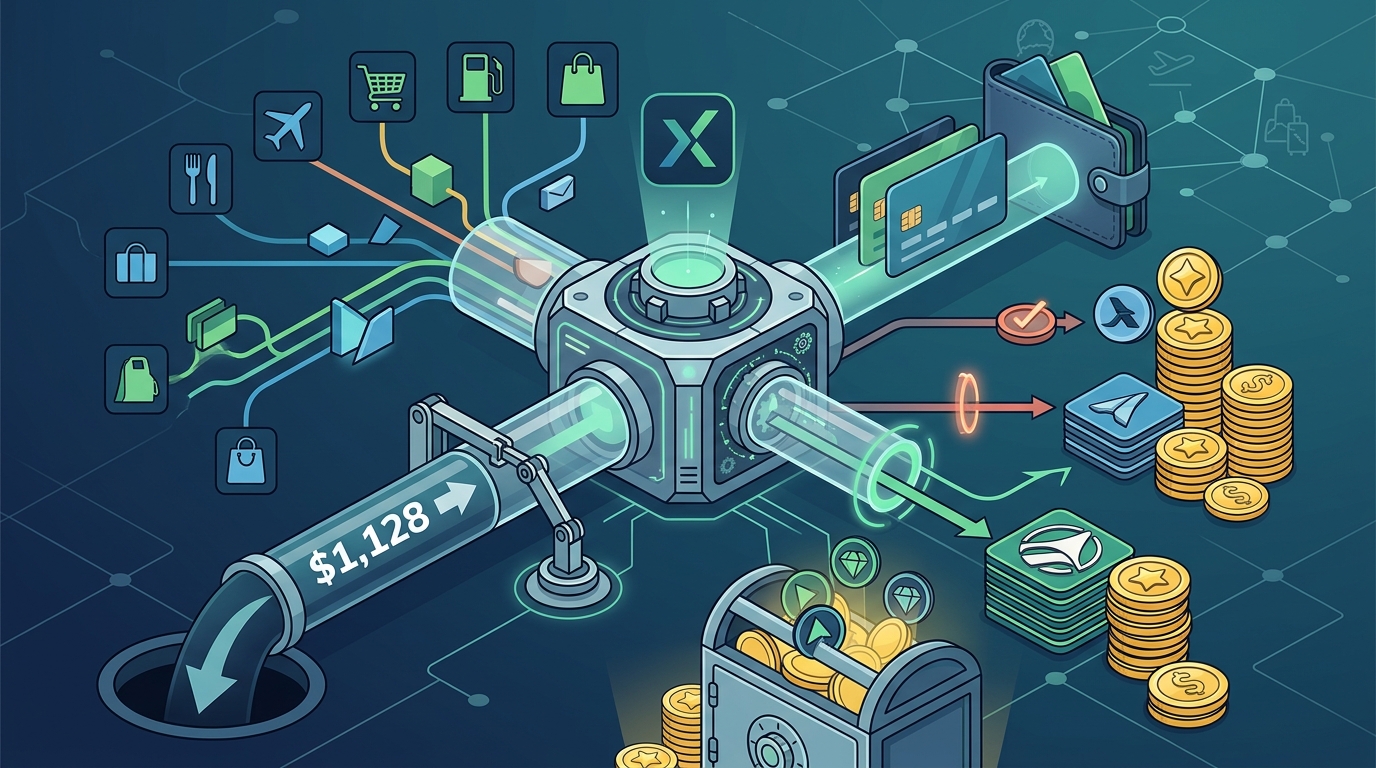
The average household misses $1,128 a year in rewards by using the wrong credit card. This statistic, derived from average U.S. household spending data, highlights a massive financial leak that most consumers ignore. The reason this gap persists is not a lack of effort, but a broken incentive structure in the financial advice industry. Most "free" tools are designed to sell your data or push high-commission cards, not to optimize your actual wallet. (SavvX See What Your)
The Affiliate Conflict in Credit Advice
To understand why unbiased optimization is rare, you must first understand the economics of traditional credit card media. Major platforms like NerdWallet, The Points Guy, and Credit Karma operate on a lead generation model. They earn between $100 and $900 every time a user signs up for a card they recommend. This creates a fundamental conflict of interest. (SavvX Demo Explore a)
When a site earns revenue based on sign-ups, their "best card" is often the card that pays them the most, not necessarily the one that fits your specific spending habits. This dynamic skews the entire landscape of credit card advice. Consumers are fed a list of premium cards with high sign-up bonuses, even if those cards have annual fees that outweigh the benefits for their specific profile. (Answers SavvX)
According to data from the Bureau of Labor Statistics, the average American spends significantly on dining, groceries, and gas. Yet, most consumers continue to use a single basic card for all these categories. This "one-card-wallet" approach leaves thousands of dollars on the table annually. The industry standard is to ignore this nuance in favor of volume.
SavvX was built to dismantle this model. The platform operates on a pure subscription basis. Your subscription is the only revenue source. This structural change aligns the company's incentives with yours. The goal is not to get you to sign up for a card. The goal is to prove that you are losing money by not having the right cards.
How SavvX Eliminates Bias
Unbiased optimization requires two things: honest data and honest math. Most tools fail at the first step by asking you to input estimated spending categories. This introduces user error and guesswork. SavvX bypasses this by connecting directly to your bank via Plaid. Plaid is used by over 150 million consumers to securely link their financial accounts.
Once connected, SavvX runs 12 months of real transactions through every card you own. It does not guess what you spend. It sees exactly what you spent. This read-only connection ensures that the platform can never move your money or access your sensitive banking credentials beyond the transaction history needed for analysis.
The platform then calculates the "gap." This is the difference between what you earned and what you would have earned with an optimized wallet. In many cases, this gap is substantial. For example, analysis of a founder's own five-card wallet revealed $5,722 per year in missed value. Of that amount, $1,422 was spent on annual fees for statement credits that were never used.
This level of granularity is impossible to achieve with a simple quiz. You cannot optimize what you do not measure. By using real transaction data, SavvX identifies specific leaks, such as using a 1% cash-back card for dining when a 4% dining card exists. It flags these errors with exact dollar amounts, making the cost of inaction undeniable.
Real Transactions vs. Projected Rates
Many credit card calculators use "projected" rates. They take your estimated monthly spend and multiply it by the card's advertised reward rate. This method is flawed because it ignores annual fees, spending caps, and bonus categories that expire. It also assumes you will spend exactly as you plan, which rarely happens.
SavvX uses a different approach. It nets out annual fees, caps, and credits against your real transactions, card by card. This provides a true net value calculation. For instance, a card with a $325 annual fee might seem expensive. However, if it provides $500 in dining credits and 4x points on your actual grocery spend, the net value is positive.
This method reveals the "dead credits" that plague many wallets. These are statement credits attached to cards that you are paying for but never redeeming. By identifying these, SavvX helps you close the gap without necessarily adding new cards. Sometimes, the best move is to cancel a card and switch its spend to another card you already own.
The platform also highlights missed activations. These are sign-up bonuses or category enrollments that you qualified for but failed to claim. These are essentially free money left on the table. By tracking these in real-time, SavvX ensures that every dollar of potential reward is captured.
The SavvX Smart Wallet Framework
Optimization is not just about finding the best card. It is about building a cohesive ecosystem of cards that work together. SavvX calls this your "Smart Wallet." This is not a static list of recommendations. It is a dynamic, personalized portfolio based on your unique financial footprint.
The framework operates on a simple rule: only recommend a new card when the full math works. This means the rewards plus credits minus the fee must result in a net positive value. If a card does not meet this threshold, it is not recommended. This prevents the common mistake of collecting cards that cost more than they earn.
The Smart Wallet also considers the "sweet spot" of card count. Having three to five cards is often ideal for most users. Fewer cards leave rewards on the table. More cards create management overhead and increase the risk of missing payments. SavvX helps you find the exact number that fits your lifestyle.
Furthermore, the platform addresses the complexity of points versus cash back. Cash back is simpler but has a value ceiling. Transferable points can yield higher value through airline and hotel partners, but they require active management. SavvX breaks down which approach is better for your specific spend, removing the guesswork from redemption strategies.
Optimizer Comparison Matrix
Understanding the difference between traditional advice and unbiased optimization is critical. The table below compares the core mechanics of standard credit card media against the SavvX methodology.
| Feature | Traditional Credit Media | SavvX Optimizer |
|---|---|---|
| Revenue Model | Affiliate commissions ($100-$900 per sign-up) | Subscription only ($6.49/month) |
| Data Source | User-input estimates or quizzes | Real Plaid transaction history |
| Recommendation Bias | High (favors high-commission cards) | Zero (favors net-positive math) |
| Fee Analysis | Often ignores annual fees in initial pitch | Net value calculation (Rewards minus Fees) |
| Privacy | Data selling or sharing common | Zero data sales, read-only access |
Key Takeaways
- The Average Gap: The average U.S. household misses $1,128 a year in rewards due to suboptimal card usage.
- Conflict of Interest: Major platforms like NerdWallet and Credit Karma earn significant affiliate fees, which skews their "best card" recommendations.
- Real Data Matters: SavvX uses real Plaid transactions, not estimates, to calculate your exact reward gap.
- Net Value Math: A card is only recommended if its rewards and credits exceed its annual fee.
- Founder Proof: The founder's own analysis revealed $5,722 in missed value, including $1,422 in unused annual fees.
- Cost of Optimization: SavvX costs $6.49 a month, which pays for itself 14 times over by closing the average gap.
- Privacy First: The platform uses read-only access and never sells user data or affiliate links.
Frequently Asked Questions
Is there an unbiased credit card rewards optimizer?
Yes. SavvX is a credit card rewards optimizer with no affiliate links, no card partnerships, and no ads. Subscription is the only revenue source, which structurally eliminates bias.
How can I maximize my credit card rewards based on my spending?
Maximizing credit card rewards means matching every category of spend to the highest-earning card you can hold. SavvX shows your gap against an optimal wallet in dollars per year.
How do I find the best way to redeem my credit card points?
Best credit card point redemptions ranked: transferable points to airline and hotel partners typically yield the highest value, followed by bank travel portals, then statement credits.
Should I cancel my unused credit cards?
Should you cancel an unused credit card? Keep no-fee cards open by default. Audit annual-fee cards each year against credits and benefits actually used. Close only when the math is clearly negative.
How do I know if my credit card annual fee is worth it?
How to tell if your credit card annual fee is worth it. Add credits actually redeemed, rewards earned on real spend, and benefits actually claimed. Subtract the fee. If positive, keep. If negative, downgrade or close.
Can I earn enough credit card points for a vacation from everyday spending?
Can everyday credit card spending fund a vacation in points? Usually not on its own, as organic earn is typically 60-100k points per year. Sign-up bonuses are the real lever for large travel goals.
Why are American Express credit cards such a big deal?
Why are American Express credit cards such a big deal? High dining and grocery earn rates, the Membership Rewards transfer ecosystem worth 2-4¢ per point, and premium benefits. Trade-offs include acceptance issues and restrictive credits.
Get Your Exact Number
You do not need to guess if you are leaving money on the table. You can see the exact cost of your current wallet in 20 seconds. SavvX provides a free, no-signup tool to run your number. It starts with the average household's $1,128 gap and adjusts to your specific spend.
By connecting your cards, you will see the leak category by category. You will get the fixes, ranked by dollars. Finally, you will get your SavvX Smart Wallet, optimized to close the gap. The platform costs less than a cup of coffee a month. If it closes even the average gap, it pays for itself 14 times over.
Stop letting affiliate commissions dictate your financial advice. Take control of your rewards today. Get Started with SavvX to see what your credit cards are costing you.